


Working Group Webinars
All ISAC webinars are free to attend and free to watch after the event.
The webinars provided by the International Society of Antimicrobial Chemotherapy (ISAC) are for informational purposes only. No material contained herein is intended to be a substitute for professional medical advice, diagnosis, treatment or national / local guidelines.
The opinions expressed in a webinar are those of the author(s) only and may not necessarily represent the views of ISAC. Where links are provided to other sites and resources of third parties, these links are provided for your information only. ISAC neither endorses not accepts responsibility for the contents of those sites or resources.
Working Group Webinars
Alliance for the Prudent Use of Antibiotics (APUA)

Viral Respiratory Tract Infections (RTIs): superinfections

The Alliance for the Prudent Use of Antibiotics (APUA) is delighted to invite you to its next free webinar.
Superinfection of viral respiratory infection has been one of the hottest topics during the first waves of COVID-19: although it was rapidly demonstrated that coinfections were rare during the first days, fungal or bacterial superinfections was a major cause of death for intensive care unit patients on various immunosuppressive treatments (dexamethasone, IL6-inhibitors, etc.), who required prolonged mechanical ventilation. More recently, the burden of Group A streptococci superinfections have dramatically increased, in children and in adults, for reasons that still remain unclear.
ISAC and APUA invited three worldwide experts in the field of superinfections, to share with us the main features of these hot topics.
Speakers
Prof. Nina van Sorge is Professor of Translational Microbiology and Head of the Netherlands Reference Laboratory for Bacterial Meningitis.
Nina van Sorge studied Pharmacy at Utrecht University and she performed her PhD research at the University Medical Center Utrecht on the topic of autoantibodies in the pathogenesis of Guillain-Barre syndrome.
After a short-term overseas fellowship and a mini-postdoc studying bacteria-lectin interactions at Utrecht University, she took up a second post-doc position in the lab of Prof. V. Nizet at UCSD to expand her knowledge in bacterial pathogenesis research. She returned to the UMC Utrecht on a MCSA Fellowship in 2012 and started her own research group in 2014 on the topic of bacterial glycobiology. In 2020, she moved her research group to Amsterdam UMC studying bacterial pathogenesis with a special focus on bacterial glycosylation in this process.
Prof. Anuradha Chowdhary is a Professor of Medical Mycology in the Department of Medical Mycology at Vallabhbhai Patel Chest Institute, University of Delhi, India. Prof. Chowdhary is a member of the ISAC Executive Committee. Her research focus on antifungal resistance, molecular typing and epidemiology of emerging pathogenic fungi. Prof. Chowdhary’s latest research concerns the understanding of the emergence of multidrug resistant strains of Candida auris. This yeast which has globally emerged as a nosocomial pathogen is a serious therapeutic challenge and similar geographical clonal strains of C. auris are emerging in other countries. Her research has additionally yielded important insights into the ecological niches of Cryptococcus and the mechanism and spread of multi azole resistant Aspergillus fumigatus.
Prof. Alex Soriano is a Consultant of Infectious Diseases in the Infectious Diseases Department of the Clinical and Provincial Hospital of Barcelona, Spain, since 2001. He studied medicine at the University of Barcelona from where he also received his Ph.D. in Medicine. His main research interest is in severe infections caused by Gram-positive and Gram-negative bacteria, as well as the diagnosis and treatment of foreign-body infections, with a particular interest in prosthetic joint infections. In recent years, Alex has studied the effectiveness of combination therapy versus monotherapy, using a third-generation cephalosporin in bacteraemic Pneumococcal pneumonia. He has suggested that therapy with a cephalosporin plus a macrolide or a fluoroquinolone is associated with a lower mortality rate compared with β-lactams. Alex has also been involved in utilising new antibiotics against Gram-positive bacteria and in the use of antibiotics against erythromycin-susceptible and -resistant Streptococcus pneumoniae. He has authored several book chapters and over 300 peer-reviewed publications and is currently the Vice President of the European Bone and Joint Infection Society (EBJIS) and Co-editor in Chief of Infectious Diseases and Therapy.
Prof. Souha Kanj is a tenured Professor of Medicine at the American University of Beirut Medical Center, Lebanon, and Consulting Professor at the Duke University Medical Center, Durham, North Carolina, USA. She is currently President-Elect of ISAC, Head of the Division of Infectious Diseases, Chair of the Infection Control and Prevention Program, Co- Chair of the Antimicrobial Stewardship Program and Associate Dean for Global Affairs at the American University of Beirut Medical Center. Prof. Kanj has published more than 230 papers in national and international journals such as Mycoses, Infection, Lancet Infectious Diseases and the Journal of the American Medical Association (JAMA). She has contributed greatly to the work of the World Health Organization (WHO) in various programs, such as the R&D Blueprint Annual Review of Priority Diseases, the Global Infection Prevention and Control Network, and the WHO Priority Pathogens List Project for Antimicrobial Resistant Bacteria.

The fight against antimicrobial resistance: a luta continua!
Expert speakers provided updates on the current AMR situation worldwide, with a particular focus on low- to middle- income countries (LMICs), and the efforts to fight it.
Speakers
Chairs
Prof. Pierre Tattevin / Prof. Heiman Wertheim
- Estimating the global burden of antimicrobial resistance (AMR) and how this evidence is informing new studies
Dr Catrin Moore (UK) - Potential use of C-Reactive Protein testing to optimise community use of antibiotics
Dr Do Thi Thuy Nga (Vietnam) - International Centre for Antimicrobial Resistance Solutions (ICARS): Partnering for impact
Dr Nandini Sreenivasan (Denmark) - Antimicrobial resistance in Honiara, Solomon Islands
Dr Bianca Graves (Australia) - Prevalence and drivers of over-the-counter antibiotic sales among community drug outlets to develop mitigatory behaviour change interventions
Dr Joseph Acolatse (Ghana) - Optimised doses of polymyxins to improve outcomes for on-critically ill and critically ill patients with multidrug-resistant (MDR) Gram-negative bacterial infections
Dr Puteri Zamri (Malaysia)

Beyond the pill: Transformative approaches to combat antimicrobial resistance
This joint webinar was hosted by the AMR Declaration Trust and the Alliance for the Prudent Use of Antibiotics (APUA) on 26 August 2023.
The aim of this webinar was to delve deep into the multifaceted issues surrounding antimicrobial resistance (AMR). Drawing from expertise across different regions and specialties, experts explored strategies ranging from grassroots implementation to high-level policy changes.
Anti-Infective Pharmacology Working Group

Insights of antimicrobial therapy in biofilm-associated infections: the clinical paradigm of prosthetic joint infections
Dr Jaime Lora-Tamayo (Hospital University 12 de Octubre, Madrid, Spain) presented an overview of biofilm-associated infections by using the specific problems of prosthetic joint infections as example. Dr Lora-Tamayo focussed on the antimicrobial treatment of these infections.

New Roles of beta-lactamase enzymes
The discovery of beta-lactamase encoding sequences in different organisms and also in humans and arthropods, has opened a new field of research of their roles, since these enzymes are multi-functional and have a very ancient evolution in kingdom of life.
Jean-Marc Rolain (Editor, International Journal of Antimicrobial Agents, France) provided some examples of such discovery, including new roles of these enzymes in different fields.

Clinical Trials Targeting Antimicrobial Resistance
Antimicrobials have been a cornerstone of modern medicine. However, antimicrobial resistance is now one of the most urgent global health threats. To combat the increasing antimicrobial resistance, optimising the clinical use of current antibiotics and development of new antibiotics are critical and require robust clinical trials using pharmacokinetic/ pharmacodynamic/toxicodynamic principles.
In this ISAC online roundtable event, internationally leading clinicians and researchers reviewed the latest progress in clinical trials on antibiotics targeting antimicrobial resistance and discuss the challenges and opportunities.
Speakers
Chairs
Jian Li / Jaime Lora-Tomayo
- Clinical trials of new antibiotics: Innovations and challenges
David Paterson - Defining antibiotic treatment duration - experience from a multicentre randomised trial in Asia
Mo-Yin - Clinical trial networks to tackle AMR
David Lye

Phage pharmacology & therapy
This webinar was organised by International Society of Anti-Infective Pharmacology (ISAP), ESCMID PK/PD of Anti-Infectives Study Group (EPASG) and ISAC's Anti-Infective Pharmacology Working Group.
Antimicrobial resistance (AMR) poses a major global health concern. With antibiotics losing their stand against AMR, bacteriophages (phages; bacteria-eating viruses) have emerged as a promising antibacterial strategy.
In this webinar, a panel of speakers discussed the journey of phage therapy, spanning from ‘benchside’ to ‘bedside’, while also delving into the intricate pharmacological aspects to enhance clinical use of phages.
Speakers
Phage therapy: benchwork expeditions - Dr Sue Nang
Implementing phage therapy in the clinic under the banner of Phage Australia - Prof. Ruby Lin
Modelling of in vivo bacteriophage dynamics - Dr Jérémy Seurat
Moderators: Dr Yu-Wei Lin and Prof. Sebastian Wicha
Bone, Skin & Soft Tissue Infections Working Group

Hot topics on skin, bone and joint infections
Thank you for joining the webinar on Hot topics in skin, bone and joint infections on 24 March 2022.
The webinar covered a variety of interesting topics including mycobacterial peri-prosthetic joint infections, application of molecular assays in the diagnosis of septic arthritis, epidemiological data related to skin infections as well as timing for intravenous to oral switch in skin and soft tissue infections and antibiotic alternatives in some of these infections.
Speakers
- Non tuberculosis mycobacteria and prosthetic joint infections
Monica Chan - Reactive Oxygen skin and soft tissue treatment
Matthew Dryden - The results of the Italian registry for SSTI, real life epidemiology and treatment of SSTI
Pasquale Pagliano - Detection of difficult to culture bacteria associated with bone and joint infections using real-time Polymerase Chain Reaction (PCR)
Nusreen Ahmad-Saeed (UK) - Criteria for early switch from IV to oral antibiotics in hospitalized patients with SSTI: a prospective study
Parham Sendi

Ortho spinal infections in the era of increasing AMR
Learn from current experiences across the globe on how to manage ortho spinal infections and provide insight into novel diagnostics, antibiotics and antibiotic alternatives.
Speakers
Moderator: Kordo Saeed
Phage therapy in bone and joint infections - Dr Antonia Scobie
Antimicrobial resistance in fracture-related infections: what can we do? - Dr Julie Lourtet
Spinal infections epidemiology, diagnosis and outcomes from a single centre - Giorgio Bartalucci
Closing statements
Early Career

Membrane lipid remodelling confers polymyxin resistance in Gram-negative bacteria
This free webinar discussed the mechanism(s) underpinning the rapid and extensive membrane lipid remodelling and its relationship with polymyxin resistance in Gram-negative bacteria.
Speakers
Speaker
Dr Meiling Han (Monash University)
Moderators
Wenyi Li (La Trobe University)
Dr Jinx Zhao (Monash University / ISAC Early Career Chair)

Journey into the anti-infective field: academia, clinical and industry perspectives
The ISAC Early Career Working Group and Anti-infective Pharmacology Working Group organised the first International Society of Antimicrobial Chemotherapy (ISAC) and International Society of Anti-Infective Pharmacology (ISAP) joint Early Career webinar.
This webinar aimed to provide a platform for early career researchers (ECRs) to obtain career advice and to better understand the pressures impacting them and their career development.
Speakers
Moderators:
Dr Jinxin Zhao (Monash University / ISAC Early Career Chair)
Dr Alina Nussbaumer-Pröll (Medical University of Vienna / ISAP Secretariat
- Academic speaker - Prof. Sebastian Wicha (Hamburg University)
- Clinical speaker - A/Prof. Thomas Tängdén (Uppsala University, Sweden)
- Industry speaker - Dr Cuong Vuong (Janssen Pharmaceuticals, Belgium)

Introduction to adapative clinical trial design
Adaptive designs can make clinical trials more flexible by utilising results accumulating in the trials to adjust the trials with respect to pre-specified rules. Adaptive design trials are often more efficient, informative and ethical than trials with a traditional fixed design since they often make better use of resources such as time and money and might require fewer participants.
Adaptive designs can be applied across all phases of clinical research, from early-phase dose escalation to confirmatory trials.
This talk introduced different types of adaptive designs, general principles and their key aspects. The focus is on the interpretation and reporting of results from adaptive designs through examples in literature.
This webinar is the second in the Working Group's series on "When Pharmacometrics and systems pharmacology meet infectious diseases".
Speakers
Dr Amanda Wang (Speaker)
Dr Nusaibah Abdul Rahim (Moderator)

Antimicrobial Pharmacometrics: Mathematical Models for Antimicrobial Research and Development
In this talk, Dr Yu-Wei Lin introduced different antimicrobial pharmacometric techniques and highlighted the usefulness of pharmacometric analyses in antimicrobial research.
The world now faces an enormous and growing threat from the emergence of bacteria that are resistant to almost all current antibiotics. In this context, the field of pharmacometrics using mathematical models has, in recent years, emerged as an invaluable tool in academia, industry and regulatory agencies to facilitate the integration of preclinical and clinical data and to provide a scientifically based framework for designing and optimising dosing regimens.
In this talk, Dr Yu-Wei Lin introduced different antimicrobial pharmacometric techniques and highlight the usefulness of pharmacometric analyses in antimicrobial research.
This webinar is the second in the Working Group's series on "When Pharmacometrics and systems pharmacology meet infectious diseases".
Speakers
Dr Yu-Wei Lin (Speaker)
Dr Jinxin Zhao (Moderator)
ICU & Sepsis Working Group

Hot topics on infections in critical care
Infections represent a major cause of morbidity and mortality in the critical care setting, especially in our era of multidrug-resistant pathogens.
During the COVID19 pandemic, on the other hand, a significant increase in the prevalence of ICU infections has been reported. Prompt diagnosis of critical care infections and appropriate treatment in optimised doses, along with antibiotic stewardship, are of outmost importance for improved outcomes and tackling antimicrobial resistance development.
Speakers
Chair
Despoina Koulenti
- Diagnosis and management of severe community-acquired pneumonia
Antoni Torres - Diagnosis and management of abdominal sepsis
Jan De Waele - Management of infections caused by MDR Gram-negative pathogens
Patrick Harris - Management of S.aureus bacteremia
Stefan Hage - Viral infections in the Intensive Care Unit
Sotirios Tsiodras - Role of biomarkers for sepsis diagnosis in critically ill patients
Pedro Povoa - Antibiotic de-escalation
Liesbet De Bu - Antibiotic stewardship (in COVID-19 era)
Jeroen Schouten - Therapeutic Drug Monitoring and antibiotic optimization in the Intensive Care Unit
Hafiz Abdul-Aziz - Host-targeted immunotherapies in the Intensive Care Unit
Antoine Roquilly - COVID-19 in haematological malignancies: outcome of infection and the effects of vaccination
Evangelos Terpos - Ventilator associated pneumonia in COVID-19 patients
Andrew Conway Morris - Management of severe COVID19 infection
John Marshall
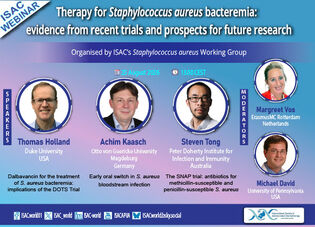
MRSA

Antibiotic susceptibility patterns used for epidemiologic surveillance of Staphylococcus aureus
There have been recent studies in the US and Spain showing emerging resistance in MSSA to macrolides and to tetracyclines. ST398 S. aureus strains, initially identified as “livestock associated MRSA” are a fascinating example. Studies of clinical S. aureus strains have in some cases included molecular epidemiology suggesting that ST398 S. aureus strains may be responsible for a change in the relative prevalence of strains causing clinically significant disease. Other studies have examined national or transnational emergence of various increasingly common strains of MRSA and MSSA, using susceptibility patterns to track strain emergence or change over time. Listen to this webinar and hear from 3 experts in the field on these topics.
Speakers
Insights into the changing epidemiology of S. aureus in Boston, Massachusetts using routinely collected electronic health record data - Dr Sanjat Kanjilal (Harvard University)
Exploring the surveillance potential of phenotypic susceptibility tests in outpatient S. aureus infections among US Veterans, 2010-2019 - Dr Margaret Carrel (University of Iowa)
A 2019 prospective survey of the genomic epidemiology of S. aureus in South America: results from the first StaphNET-SA network - Dr Sabrina N. Di Gregorio (University of Buenos Aires)
Moderators
Prof. Margreet Vos and Dr Michael David
MRSA Working Group

Regional & National MRSA Surveillance Programmes Worldwide
The webinar aimed to review national and regional surveillance programmes for Methicillin-Resistant Staphylococcus aureus (MRSA).
The first meeting included brief presentations from laboratories in several countries that undertake MRSA surveillance. This was followed by a period of moderated discussion to assess best practices. The goals were to understand the variety of approaches to surveillance worldwide and to develop principles that may underlie future harmonization of surveillance methods.
Speakers
Chairs
Margreet Vos / Valerie Baede / Michael Z. David
Regional & National MRSA Surveillance Programs: results of a survey
Valerie Baede
Short laboratory presentations from the following speakers:
- Harald Seifert (University of Cologne, Germany)
- Anders Rhod Larsen (Statens Serum Institut, Copenhagen)
- Guido Werner (Robert Koch Institute, Wernigerode)
- Leo Schouls (Centre for Infectious Disease Control Netherlands (CIb), National Institute for Public Health and the Environment, the Netherlands)
- Joanna Empel (National Medicines Institute, Warsaw, Poland)
- Michael Borg (Mater Dei Hospital, Malta)
- Domnique Blanc (Lausanne University Hospital,, Switzerland)
- Boudewijn Catry (Sciensano, Belgium)
- Helena Žemličková (National Institute of Public Health, Czech republic)
- Aurélie Chabaud (Limoges University Hospital, France)
- Francois Vandenesch (National Reference Center for Staphylococc, France)
Rapid Diagnostics & Biomarkers Working Group

Rapid diagnostics & biomarkers at the heart of patient management
Provision of medicine is transforming due to the amount of research and development in novel diagnostics and technologies.
In this webinar, ISAC’s Rapid Diagnostics & Biomarkers Working Group provided a number of short presentations on how rapid and novel diagnostics and technologies and their application can impact clinical practice and the provision of microbiology, infectious disease, antimicrobial stewardship and infection control services.
Speakers
Chair
Kordo Saeed (University Hospitals Southampton NHS Foundation Trust, UK)
- Role of PCT in COVID-19 Patients
Eric Howard Gluck (Swedish Hospital, USA) - Rapid pneumonia diagnostics in the molecular age: results from the SARIPOC trial
Stephen Poole (Biomedical Research Centre, UK) - Is proinflammatory biomarker ProADM helpful for risk stratification in COVID-19 patients?
Philipp Schuetz (Kantonsspital Aarau, Switzerland) - QiaSTAT and patient safety: experiences with a rapid PCR system
Peter Laszlo Kanizsai (University of Pécs, Hungary) - Rapid biomarkers in community setting to improve antibiotic use
Heiman Wertheim (the Netherlands)

Rapid diagnostics and strain typing in the era of increasing AMR
Join this free webinar organised by ISAC's Rapid Diagnostics & Biomarkers Working Group
11 April at 13.00 (UK) / 14.00 (CET)
The aim is to learn from current experiences across the globe on how rapid diagnosis impacts on curbing antimicrobial resistance (AMR).
Speakers
- Novel diagnostics for UTIs and impact on rapid antimicrobial sensitivity - Dr Lucy Bock
- Rapid diagnosis of Hepatitis B in a LMIC and impact on prevention measures - Dr Saranga Sumathipala
- Metagenomics and potential impact on AMR and infection prevention in critical care settings
Viral Infections

Monkeypox: a new human threat?
Experts provided the latest information on the epidemiology, transmission, diagnosis, prevention and treatment of monkeypox and ISAC's recent webinar which was organised by the Viral Infections Working Group.
Speakers
- Immunology and virology
Dr Noha Hammad - Transmission dynamics
Dr Kalisvar Marimuthu - Clinical aspects of monkeypox
Prof. Souha Kanj - Ongoing epidemiology of monkeypox
Prof. Alfonso Rodriquez-Morales - Infection prevention and control of monkeypox
Dr Rehab Tash

Dissemination of viral infections during mass gatherings
The purpose of this webinar was to outline the most significant viral infections currently associated with mass gatherings, suggest key planning considerations for the organisers of mass gatherings in the context of novel viral outbreaks and provide general advice on the public health aspects of mass events.
Speakers
Moderator: Prof. Fatma Amer (Chair of ISAC's Viral Infections Working Group)
- Respiratory-borne viral infections during mass gatherings
Prof. Jaffar A. Al-Tawfiq - Monkeypox virus: is it the coming challenge during mass gatherings?
Prof. Alfonso J. Rodriguez-Morales - Water- and food- borne viral infections during mass gatherings
Dr Anusha Rohit - Vector-borne viral infections during mass gatherings
Dr Rehab Tash

Zero by 2030: One Health perspectives of rabies elimination
This webinar aims to raise awareness of various aspects related to rabies for both healthcare workers and the public.
Objectives:
1. To describe rabies virology and vaccination.
2. Global epidemiology of rabies.
3. Specify the importance of different animal reservoirs in the spread of the virus.
4. To explain One Health perspectives in rabies elimination.
Speakers
Rehab Tash is an associate professor of medical microbiology and immunology at Zagazig University, Egypt and an infection control consultant and auditor. Dr Tash is a certified associate trainer (International Board of Certified Trainers) and CIPT (Certified International Professional Trainer ) and has a diploma of health professions education (DHPE/SCU). She shared in designing and conducting a Masters degree of infection prevention and control (IPC) at Zagazig School of Medicine, and training programs for health care workers in IPC & quality. She is an author and editor of infection control books (Arabic and English).
Alfonso J. Rodriguez-Morales is an expert in tropical and emerging diseases, particularly in zoonotic and vector-borne diseases (especially arboviral diseases), now including COVID-19. He is President of the Publications and Research Committee of the Pan-American Infectious Diseases Association (API), as well as President of the Colombian Association of Infectious Diseases (ACIN).
He is member of the Committee on Tropical Medicine, Zoonoses and Travel Medicine of ACIN. He is Vice President of the Latin American Society for Travel Medicine (SLAMVI) and Member of the Council of the International Society for Infectious Diseases (ISID).
J. Scott Weese is a veterinary internist, a Diplomate of the American College of Veterinary Internal Medicine, and a Fellow of the Canadian Academy of Health Sciences. He is a Professor at the Ontario Veterinary College, University of Guelph, Director of the University of Guelph Centre for Public Health and Zoonoses, Chief of Infection Control at the Ontario Veterinary College Health Sciences Centre, and is a member of the Tripartite Global Leaders Group on AMR and Chair of the WHO Advisory Group for Critically Important Antimicrobials in Human Medicine.
Nissreen ElSayed Elbadawy is a professor of Medical Microbiology & Immunology at the Department of Medical Microbiology & Immunology, Faculty of Medicine, Zagazig University, Egypt. She has previous experience as consultant of immunotherapy in an immunology unit, investigator in molecular biology unit, and consultant of infection control in Zagazig University Hospitals.
Fatma Amer is past head of Medical Microbiology and Immunology, Faculty of Medicine, Zagazig, Egypt where she is an emeritus professor. She is an Executive Committee member of ISAC and Chair of the ISAC Viral Infection Working Group. She has extensive work and research on virology and viral infections, particularly hepatitis C virus type, and published for the first time (in Egypt and worldwide) the mutants responsible for resistance to DAAs among Egyptian HCV genotype 4a patients. She is a consultant for the WHO Advisory Group of the Critically Important Antimicrobials for Human Medicine (AG-CIA) and for Infection Prevention and Control (IPC) nationally, regionally and internationally.
Zoonoses

H5N1 Avian Influenza: the path from panzootic to pandemic
The recent global expansion of a novel avian influenza H5N1 strain is characterised by enhanced avian species adaptations, leading to mass mortality events, even threatening extinction of certain species. The strain has also been adapting to mammals with similar mass mortality events for certain species, and furthermore has been expanding to novel territories, particularly the Americas. Its mammal adaptation raises concerns for its potential to adapt to humans, facilitating human to human transmission and a pandemic. The evolutionary steps needed though are multiple. Yet, a H5N1 pandemic is a plausible future scenario, one that needs approaches and preparations specific for H5N1.
Hear from global experts in the field in this informative and timely webinar.
Speakers
* H5N1 and animal health: expansion and impacts on wildlife conservation - Dr Isabella Monne (Istituto Zooprofilattico Sperimentale delle Venezie, Italy)
* H5N1 in mammals: what evidence do we see for ongoing human adaptation - Dr Tom Peacock (The Pirbright Institute / Imperial College London, UK)
* Public health preparedness for a potential H5N1 pandemic - Prof. Charles (Todd) Davis (Centers for Disease Control and Prevention, USA)
The session was moderated by Zoonoses Working Group Chair, Prof. Georgios Pappas (Institute of Continuing Medical Education of Ioannina, Greece).
