


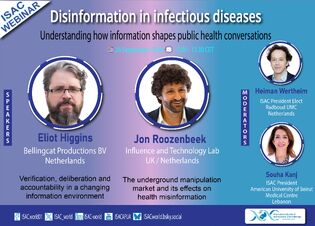

Watch now

Thank you to those who were able to join the recent ISAC COVID-19 Effective Treatments Webinar. We really hope you enjoyed the presentations.
The webinar was very well attended with registrants from 86 countries.
In case you were unable to join the webinar or would like to rewatch it at your leisure, please click the button below.

If you have any feedback, please do not hesitate to get in touch.
ISAC's next free webinar on "Long COVID" is coming soon. Keep an eye on the website for updates.

If you were not able to attend previous ISAC webinars, you can watch them all again here.
COVID-19: Around the World in 80++ Minutes
This unique webinar brought a global view of the pandemic from those on the front-line in diverse parts of the world. It covered aspects of epidemiology and genomics, screening, control, treatment and consequences of infection. The speakers, all leaders in their fields, have a unique perspective of how the pandemic affects their regions.
COVID-19: Vaccines
This timely ISAC webinar reviewed the three major vaccine candidates currently licensed for use. Three experts in their field who are also involved in their national vaccination programmes covered one of the vaccine types. The COVID-19 pandemic affects us all and it is important that we understand the new vaccines that are now available.
COVID-19 Variants: what are they and what do they mean for the global pandemic?
As the pandemic has progressed, molecular epidemiology has been an important tool in monitoring the progress of the infection across the world. Novel variants of SARS-CoV2 have been identified and there has been much speculation about the characteristics of these variants in terms of transmissibility, pathogenicity and vaccine escape. This exciting webinar explored these issues and the role of new virus variants in the development of the pandemic.
Regional & National MRSA Surveillance Programmes
This webinar, sponsored and organised by ISAC's MRSA Working Group, reviewed national and regional surveillance programmes for Methicillin-Resistant Staphylococcus aureus (MRSA).
The first meeting included brief presentations from laboratories in several countries that undertake MRSA surveillance. This was followed by discussion to assess best practices. The goals were to understand the variety of approaches to surveillance worldwide and to develop principles that may underlie future harmonization of surveillance methods.
May 20th-2021
