



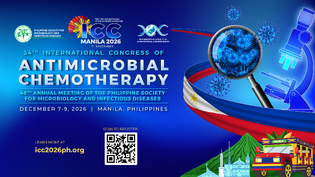

Webinar announcement!
While the whole world is focused on the COVID pandemic, antimicrobial resistance (AMR) takes no rest. The Alliance for the Prudent Use of Antimicrobials (APUA), on behalf of the International Society of Antimicrobial Chemotherapy (ISAC), is organising a webinar to provide an update on the current situation worldwide and efforts to fight AMR.
25 May at 14.00 (CET)
Find your start time by timezone.


Speaker bios
Prof. Pierre Tattevin, MD, PhD, is an infectious diseases physician, trained in Paris (fellowship), and San Francisco (post-doc) and is currently head of the Infectious Diseases Department at Rennes University Hospital (France). He is past-president of the French Society of Infectious Diseases (2018-2022), he chaired the antimicrobial stewardship (AMS) group of the International Society of Antimicrobial Chemotherapy (ISAC) and became Chair of the Alliance for the Prudent Use of Antibiotics (APUA) when it merged with the ISAC AMS group. He has a specific interest in Antimicrobial Stewardship for low-and-middle income countries. He has authored or co-authored >500 papers indexed in Pubmed, mostly as a first or last author. His H-index is 46.
Prof. Heiman Wertheim is a professor in clinical microbiology and heads the clinical microbiology department at Radboud University Medical Center and is chair of the Radboud Center of Infectious Diseases (RCI, www.radboudrci.nl). One of his main interests is antibiotic resistance in both resource rich and resource constrained settings and he does this through a multidisciplinary approach: health systems, policy development, behavior, surveillance, prevention, genomics, and clinical trials to improve the situation of antibiotic resistance. He currently leads the ABACUS study in six LMICs funded by the Wellcome Trust (https://abacus-project.org/) where they study the physical appearance of antibiotics. Heiman advocates for more medical microbiology capacity worldwide. To quote Heiman: "antibiotic stewardship without medical microbiology capacity is like sailing a ship without a compass". (twitter: @heimanw)
Dr Catrin Moore led the Global Research on AntiMicrobial resistance (GRAM) project based in the Big Data Institute, University of Oxford. Partnered with the Institute for Health Metrics and Evaluation (IHME) and Tropical Medicine, they analysed global data to estimate the global burden of antimicrobial resistance (AMR). Dr Moore is a member of the World Health Organization Advisory Group on Critically Important Antimicrobials (AG CIA) for Human Medicine and is a mentor for Fleming Fund Fellows in Eswatini. Dr Moore works on studies to improve the use of interventions including antibiotic and diagnostic stewardship in low- and middle-income countries (LMICs) to reduce the unnecessary prescribing of antibiotics. Now based at St George’s, University of London she is an investigator on the Antimicrobial Resistance, Prescribing, and Consumption Data to Inform Country Antibiotic Guidance and Local Action (ADILA) project.
Dr Do Thi Thuy Nga is a post-doctoral researcher at Oxford University Clinical Research Unit (OUCRU) in Hanoi, Vietnam with 10 years’ experience working in the field of antimicrobial resistance (AMR). She was a National Coordinator of the Global Antibiotic Resistance Partnership (GARP) in Vietnam to bring the issue of AMR into the policy arena in low- middle- income countries (LMICs). She has successfully completed a large, randomised control trial to demonstrate that C-reactive protein can reduce the use of antibiotics, pivotal work to advance the AMR and diagnostic agenda globally. Currently, she is involved with community-based studies targeting inappropriate antibiotic use in the community in LMICs.
Dr Nandini Sreenivasan is a medical doctor and an epidemiologist with diverse experiences working on infectious diseases in global health settings. In her current role as an implementation research advisor at the International Centre for Antimicrobial Resistance Solutions (ICARS) in Denmark, she collaborates with partners in low and middle income countries (LMIC) to co-develop projects that are contextually-specific, technically sound and operationally feasible.
Dr Bianca Graves is an Infectious Diseases Physician/Clinical Microbiologist based in Brisbane, Australia and a member of the Pacific Regional Infectious Disease Association (PRIDA). She is passionate about enhancing the microbiology laboratory capacity in the Pacific to improve antimicrobial resistance surveillance and ultimately, patient outcomes.
Dr Eric Kofi Ngyedu is a Consultant Maxillofacial surgeon and the Chief Executive of the Cape Coast Teaching Hospital. He is also a Fellow of the Ghana College of Physicians and Surgeons. His interests lie in influencing national health policies aimed at improving the healthcare sector in Ghana. He has over 20 years of clinical experience coupled with management experience as a former medical director of the institution. He is a dedicated antibiotic steward and has led the implementation of several interventions to safeguard the use of antibiotics within his institution and at a national level.
Dr Puteri Zamri is a senior clinical pharmacist experienced in managing critically ill patients, especially focusing on infectious diseases management. She is currently interested in the research area of infectious diseases and pharmacokinetics/pharmacodynamics of antibiotics. She is now serving the Ministry of Health Malaysia and is currently affiliated as a PhD student at the University of Queensland Centre for Clinical Research (UQCCR), Faculty of Medicine, The University of Queensland, Brisbane Australia. Her research focuses on the pharmacokinetics of colistin and polymyxin B in Malaysian patients and developing clinically relevant dosing guidelines in the treatment of multidrug-resistant (MDR) A. baumannii and P. aeruginosa infections for Malaysian hospitals.
April 21st-2022
